

I have spent the better part of two decades watching UK sport make the same mistake in different packaging. We dress it up in the language of innovation, of partnership, of commercial ambition — but underneath it is the same reflex: chase the revenue, worry about everything else later.
Nowhere is this more visible, or more costly, than in the rush to embrace technology partnerships.
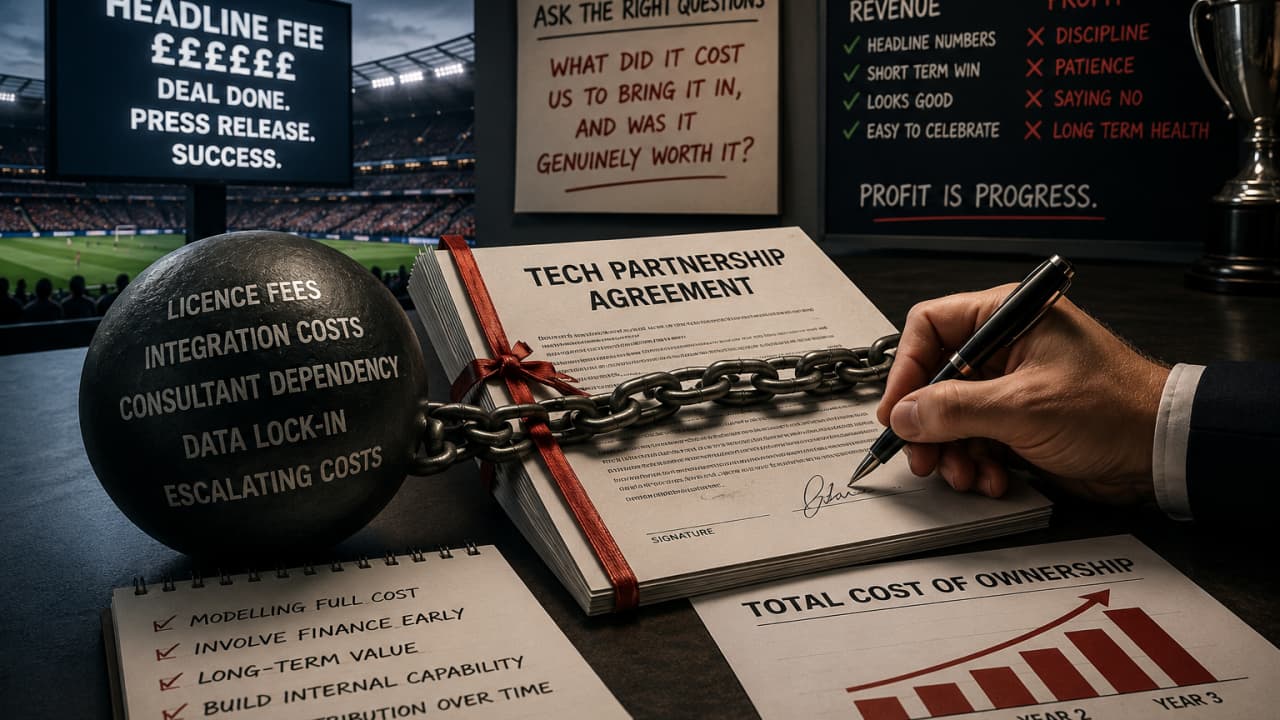
The story is depressingly familiar to anyone working in the commercial side of the game. A tech company arrives with an attractive headline fee. The deal is done. The press release lands. The commercial team is lauded. And then, quietly, the real costs begin to surface. Licence fees. Integration work that somehow was not in the original scope. Consultants who understand the platform better than anyone internal ever will and whose continued engagement is therefore not really optional. Data locked in a proprietary format that makes exit ruinously expensive.
What looked like a sponsorship turns out to be a mortgage — taken out without anyone properly reading the terms.
Why Does This Keep Happening?
Sport has always been short-termist. Our annual Sports Leadership Benchmark Report consistently shows an industry running hard just to stand still, with the vast majority of organisations reporting costs rising faster than revenue. Against that backdrop, a headline partnership fee is irresistible. It moves the needle immediately and gives everyone in the room something to feel good about.
The problem is that the headline fee is almost never the whole story. In technology deals in particular, the gap between the number on the press release and the true cost of the relationship over three years can be staggering. And the tech companies know this. The best of them have built their entire go-to-market around it:
- Low entry points that create dependency before the real costs emerge
- Auto-renewing contracts with licence escalators baked in
- Customisation that sounds like a gift but functions as a lock-in mechanism
I say this not to be cynical about their motives. It is simply good commercial strategy on their part. The problem is that sport organisations tend to lack both the technical literacy to interrogate what they are agreeing to, and the internal incentive structure to push back even when they do.
We Are Incentivising the Wrong Things
Here is the uncomfortable truth: we have built our commercial functions to reward the wrong behaviour.
Sales and commercial directors are incentivised to close. Bonuses are tied to revenue targets. The bigger the number, the bigger the celebration. Nobody’s KPI includes the licence renewal cost eighteen months later, or the consultant dependency that quietly took root while everyone was congratulating themselves on the headline. By the time the real cost of a deal becomes apparent, the person who closed it has often moved on — and taken their bonus with them.
This is not a criticism of commercial people. Many are excellent and are operating entirely rationally within the incentive structures they have been given. It is a criticism of the structures themselves.
What Good Looks Like
The answer requires a willingness to take a longer view than feels comfortable given the short-term pressures. Specifically, it means:
- Modelling the full lifecycle cost of a deal before anyone signs — not just the fee received but the licence trajectory, integration resource and operational dependency
- Involving technology, finance and operations at the start of a negotiation rather than the end
- Building commercial teams rewarded for net contribution over time, not headline revenue
- Investing in the internal capability to own technology relationships on equal terms, rather than outsourcing our understanding along with our contracts
None of this is easy. But sport cannot keep mistaking revenue for health. The media rights market remains brutally stratified. Sponsorship has been challenging since 2008. The cost base keeps rising. In that environment, deals that look like income but function like liability are not a missed opportunity — they are an accelerant on an already difficult situation.
We need to start asking a different question. Not just how much did we bring in — but what did it cost us to bring it in, and was it genuinely worth it?
Profit is harder to celebrate than revenue. It requires discipline, patience and a willingness to say no to things that look good on paper. But it is the only number that tells you whether the business is actually moving forward.
Until we treat it that way, we will keep finding out — too late — that the deal of the year has quietly become the problem of the year.
